
01 Apr The Sound of Zen: How Shakuhachi Music Was Used for Meditation
A clear guide to suizen, what “Zen shakuhachi” really means, and how to listen or begin practicing respectfully without chasing myths.
By Shawn Schroeder
The shakuhachi’s sound often feels instantly meditative, even to those unfamiliar with Japanese music. That reaction is natural, but it can also lead to confusion: listeners may assume the music is intended to relax them on command or that any airy flute track labeled ‘Zen’ has the same significance. This article explores these perceptions, clarifies what you are actually hearing, and offers a practical way to engage with shakuhachi as a contemplative art with respect and clear expectations.
What “Zen shakuhachi” actually refers to
“Zen shakuhachi” is a modern umbrella term that differs from its historical origins. Historically, the shakuhachi became associated with Zen practice through the komusō and the Fuke tradition. In this specific context, playing was a discipline of attention and breath, unlike other uses of the instrument. The term suizen, often translated as “blowing Zen,” refers specifically to meditation practiced through breath and sound—this is different from meditating in seated silence, and different from general flute playing labeled as “Zen.” (pjaesthetics.uj.edu.pl)
Two practical clarifications help first-time listeners:
- Suizen is an intentional meditative approach, not a musical genre label. A piece becomes meditative through practice and reception, not just by name. This is different from assuming that any piece played on a shakuhachi, or labeled “Zen,” functions as meditation.
- Zen, in this context, is a tradition, not a marketing term. Using “Zen” carelessly for music often strips away the discipline, cultural context, and musical requirements that give meaning to the tradition, making it distinct from casual uses of the term.
How the shakuhachi moved from a spiritual tool to a concert instrument
The shakuhachi’s history includes multiple roles. It entered Japan earlier as a court-related instrument and later became associated with Zen-related mendicant practice in the Edo period, during which the komusō used the flute in a spiritual context.
Over time, shakuhachi also became part of public musical life, including ensemble traditions. Many recordings that feel “Zen” are traditional repertoire presented as music rather than ritual. For context on performance, refer to my page on koten honkyoku shakuhachi.
What to listen for in meditative shakuhachi
People new to shakuhachi often listen for melody in a Western sense, missing what makes the instrument compelling. In meditative shakuhachi, the anchors tend to be:
- Breath as structure: you can hear the beginning, shape, and release of each breath.
- Silence as content: pauses are not empty; they are part of timing and awareness.
- Tone color as meaning: a single pitch can carry many shades through angle, air speed, and subtle embouchure change.
If you feel “pulled in,” it is often because the sound highlights attention itself: the mind notices the transition from sound to silence, effort to release, control to looseness.
Using recordings for meditation without “doing it wrong.”
You can use shakuhachi recordings respectfully for meditation, as long as you keep your intent honest and your claims modest. A few guidelines help:
- Treat the recording as a focus object, not a spiritual shortcut. Use it to refine attention, not to borrow an identity.
- Avoid labeling your session as “traditional suizen.” Unless you are practicing within guidance that connects you to the lineage and method, it is more accurate to say you are doing contemplative listening.
- Choose sources that clearly name the tradition. When recordings identify the school, repertoire, or teacher-student lineage, they are usually signaling accountability rather than atmosphere.
As a general attention practice, breath-based mindfulness is widely taught in contemporary settings; for example, UCLA Health offers structured introductions that emphasize returning attention to a chosen anchor when the mind wanders. (UCLA Health)
A simple suizen-style listening session for beginners
Step-by-step practice
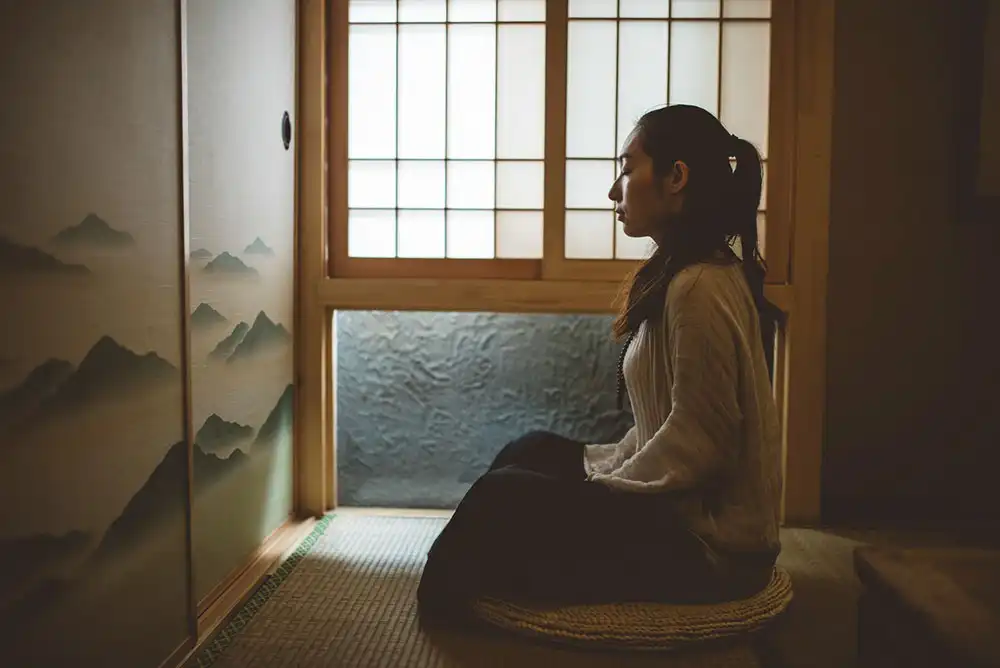
- Sit upright and relaxed, keeping the spine long. Start with brief sessions.
- Select a single track to focus your attention; avoid switching between pieces.
- Pick three anchors:
- the start of each breath tone
- the moment sound turns into silence
- the return of the next breath
- When you notice self-judgment or distraction, gently acknowledge it and refocus on your anchors.
- Close cleanly: when the track ends, sit in silence for 1 minute and notice whether you rush to evaluate the experience.
If frustration appears, that is not failure. It often means you are noticing how strongly the mind wants entertainment, certainty, or a guaranteed outcome.
Why shakuhachi meditation can feel harder than it sounds
The shakuhachi makes demands that are unusual for beginners, even in listening:
- The sound includes instability on purpose. Breath noise, pitch shading, and rough edges are part of the voice.
- Silence removes distraction. When there is less “content,” the mind supplies its own, often as impatience or self-criticism.
- “Relaxing” is not the same as “settling.” Settling can include discomfort at first.
Common beginner misunderstandings that lead to disappointment:
- Expecting instant calm rather than practicing attention.
- Treating shakuhachi as a background texture, then feeling nothing is happening.
- Assuming “Zen” means slow and pretty, rather than direct and sometimes severe.
Matching construction to a meditation-focused sound
Different instruments invite different kinds of listening and practice. In broad terms:
- Jinashi tends toward a natural, earthy tone and a darker, more mellow sound, with each flute retaining a strong individual character. When well made, it can offer an open resonant envelope that rewards careful control and close listening.
- Ji-ari is the common modern approach, shaped internally with a refined bore to support clarity, balance, and responsiveness across registers.
Neither is “more Zen.” Focus on what supports honest practice: some prefer jinashi’s raw intimacy, others the stability and clarity of ji-ari.
At this point, you may wonder: Is a bamboo instrument essential for meditation, or can a beginner instrument suffice?
Bamboo matters, but it is not a moral requirement. A beginner can do meaningful practice on a student instrument if it is reliable and supports consistent tone production. In my lesson studio, students often start with a plastic student shakuhachi, and some begin on a refurbished bamboo shakuhachi, depending on readiness and budget.
Bamboo brings its own responsibilities. It is sensitive to humidity and temperature, and it requires routine care after playing. If you are drawn to bamboo, it helps to understand that a professional shakuhachi begins long before the first note, with careful material selection, curing, and traditional craft processes.
Realistic physical and mental expectations
Shakuhachi-centered meditation is breath-driven. That means your experience will be shaped by ordinary realities: posture, attention span, and the state of your nervous system that day.
Reasonable outcomes to expect over time:
- improved ability to return attention after distraction
- more sensitivity to breath and tension
- deeper listening, including comfort with silence
Unrealistic outcomes to demand:
- guaranteed calm every session
- spiritual status by association
- “authentic Zen” without training, context, or humility
If breath-focused practices bring up anxiety or discomfort, shorten the session and prioritize steadiness over intensity. When in doubt, use a simple, well-supported mindfulness structure rather than forcing a dramatic experience. (Harvard University)
How to tell whether a “Zen shakuhachi” claim is trustworthy
Atmosphere is easy to sell; credibility is harder to fake. Signals that usually matter more than branding:
- Clear identification of repertoire and tradition: naming honkyoku, sankyoku, or a specific school is more meaningful than “healing flute.”
- Lineage and training explained plainly: teacher names, study groups, and a real history of instruction.
- Instrument transparency: whether the maker describes materials and process in concrete terms, without miracle promises.
- Respectful limits: responsible teachers and makers avoid claiming guaranteed spiritual outcomes.
When a description focuses on “ancient secrets,” instant enlightenment, or vague claims with no musical specifics, treat it as entertainment rather than guidance.
When lessons become the next best step
Self-guided listening can be valuable, but lessons become important when you want consistency and depth, especially if:
- You cannot reliably produce a stable basic tone.
- You feel stuck in breath tension, dizziness, or strain.
- You want to learn traditional repertoire with appropriate form and context.
- You want feedback that prevents long-term habits that are hard to undo.
A traditional lesson format is straightforward: regular meetings (often weekly or biweekly), focused work on tone and breath, and gradual introduction to traditional material such as honkyoku and ensemble-oriented repertoire. For readers ready to move from passive listening into genuine practice, Shakuhachi lessons provide a structured path grounded in traditional study.
Conclusion
The shakuhachi’s meditative power does not come from a mood label. It comes from breath, silence, and the disciplined shaping of tone over time, supported by cultural context and honest practice. If you begin with respectful listening, clear expectations, and a willingness to learn what the music is actually asking of you, the instrument can become a serious companion in attention training and musical depth. When you are ready to hear the tradition presented with clarity and accountability, start with a shakuhachi performance grounded in lineage and lived practice.
About the Author
Shawn Schroeder is a highly respected Shakuhachi craftsman and performer whose lifelong devotion to the instrument began in his youth and deepened through rigorous study with some of the world’s foremost masters. Since 2005, he has trained extensively under Bill Shozan Schultz, Kaoru Kakizakai, and other leading KSK teachers, including Kazushi Matama, Teruo Furuya, and Akikazu Nakamura, while traveling frequently to Japan to refine both his playing and his craftsmanship. Guided by the mentorship of renowned makers, including John Kaizan Neptune, Shingo Kimura, and Katashi Ishikawa, Shawn has mastered traditional Japanese techniques for crafting professional Jiari and Jinashi Shakuhachi of the highest quality. Upholding the integrity of centuries-old practices while carrying forward the lineage of knowledge generously shared with him, Shawn is recognized for blending uncompromising authenticity with artistry, ensuring each instrument embodies both technical precision and spiritual depth.