

01 Dec For the Rigors of Kenshukan: Chikushin Shakuhachi and the Pursuit of Perfection
Chikushin Shakuhachi embodies the disciplined spirit of the KSK Kenshūkan through uncompromising craftsmanship and devotion to traditional Japanese standards of excellence.
By Shawn Schroeder
The term Kenshūkan—a study center or institute of training—represents far more than a place of learning. Within the KSK (Kokusai Shakuhachi Kenshūkan) tradition, it serves as a crucible of discipline, where sound, craft, and spirit are refined through rigorous practice.
My own journey within this lineage has been guided by the same ethos of relentless improvement and humility that defines both the performer and the craftsman.
At Chikushin Shakuhachi, every flute I make is shaped by this pursuit of perfection—a process that unites physical precision, spiritual focus, and respect for the centuries-old Japanese ideal of shokunin kishitsu (the craftsman’s spirit).
The Meaning of Kenshūkan and the KSK Lineage
The Kokusai Shakuhachi Kenshūkan was founded by Yokoyama Katsuya in 1988 as an international school devoted to advancing both the artistry and integrity of the shakuhachi. The term kenshūkan itself conveys a place of “intensive study,” a space where effort and endurance reveal deeper understanding.
Under the tutelage of KSK masters such as Kaoru Kakizakai, Kazushi Matama, Teruo Furuya, and Akikazu Nakamura, I learned that keiko (practice) is not merely repetition—it is cultivation of the self through disciplined attention to every breath, tone, and movement.
This approach to shakuhachi playing naturally extends to making the instrument. The player confronts imperfection by refining skills, just as the maker works through raw bamboo to craft a bore and curve that reflect pure sound in line with tradition.
Keiko and the Path of Discipline
The KSK tradition emphasizes keiko as both a physical and spiritual pursuit. Every tone in honkyoku—the classical solo repertoire—demands absolute focus, integrating breath and intent into one act of expression. I approach flute making in the same spirit: each stage of shaping, measuring, and tuning becomes a form of meditation, guided by awareness and respect for the material itself.
In this discipline, perfection is never claimed; it is continuously pursued. Both the player and the maker learn patience, humility, and the strength that arises from quiet perseverance.
The Rigors of Professional Craftsmanship
The instruments I craft must meet the same demanding standards as those required by KSK performers. A Chikushin shakuhachi is not an approximation of tradition—it is built according to exacting measurements and acoustic principles developed over centuries.
From the precise shaping of the utaguchi (blowing edge) to the accuracy of the nakatsugi (mid-joint) fitting, every step is executed with tools and techniques handed down through generations of Japanese masters.
Bore tuning is central to this process. With guidance from makers such as Shingo Kimura, John Kaizan Neptune, and Takahashi Toyomi, I refined my tuning methods to strike a balance between science and intuition—using gauges as references but trusting my ear and breath as the final judges.
The resulting jiari shakuhachi achieves tonal power, responsiveness, and clarity across all octaves, meeting the full demands of concert performance.
The Spirit of Jinashi: Honoring the Bamboo
While jiari instruments exemplify refined precision, the jinashi shakuhachi expresses the opposite virtue—naturalness. In crafting jinashi flutes, I preserve the inner bore of the bamboo as much as possible, shaping only what is necessary to reveal its inherent voice.
This process draws from the meditative ethos of the komusō monks, who used the shakuhachi as a vehicle for spiritual awakening.
To craft such an instrument is to accept imperfection as beauty. Each flute retains its unique texture and tonal color, an embodiment of the bamboo’s own life. The maker’s role is not to impose control, but to listen deeply and allow the material to guide the form.
The Foundation: Madake Bamboo and the Challenges of Preparation
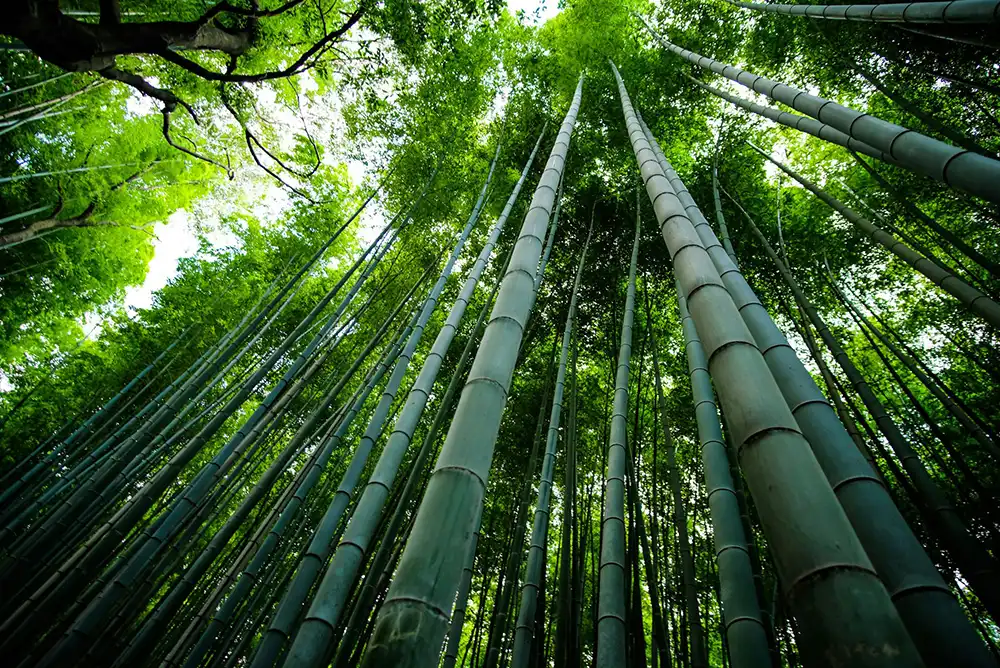
The journey toward perfection begins long before the instrument takes shape—with the bamboo itself. I harvest madake in the mountains of Kumamoto, Japan, selecting each stalk by hand using traditional tools.
The process of aburanuki (oil extraction), sun drying, and multi-year curing prepares the bamboo for stability and tonal balance.
Even a single blank may take five years to reach readiness. This patience mirrors the kenshūkan ideal: the discipline to wait, to refine, and to respect natural time. Such bamboo forms the living foundation of every Chikushin instrument.
Respect and Preservation
Perfection in shakuhachi making is inseparable from care and preservation. At Chikushin Shakuhachi, restoration work is undertaken not as repair but as homage—restoring old flutes to their original vitality while maintaining every trace of their lineage.
Environmental care and proper maintenance—protecting bamboo from dryness, heat, and neglect—reflect the same respect for tradition that sustains the art itself.
To preserve the shakuhachi is to preserve a voice that carries centuries of culture, discipline, and devotion.
Shokunin Kishitsu and the Pursuit of Perfection
The Japanese concept of shokunin kishitsu—the craftsman’s spirit—defines the essence of Chikushin Shakuhachi. It demands both mastery and humility, insisting that every action, no matter how small, reflects integrity. To pursue perfection in the kenshūkan sense is not to seek flawlessness, but to honor the process of striving itself.
Every flute embodies this ethos. Whether it is a finely tuned jiari or a quietly resonant jinashi, the goal remains the same: to create an instrument worthy of the art, the lineage, and the breath that gives it life.
Conclusion
The rigors of kenshūkan are not confined to the dojo or the practice hall; they extend into the workshop, the bamboo grove, and the craftsman’s heart. Through disciplined training, traditional methods, and reverence for nature, Chikushin Shakuhachi continues the KSK ideal of perfecting sound as an expression of spirit.
In every flute, the breath of the performer and the dedication of the maker converge—each striving, in its own way, toward perfection.
Visit Chikushin Shakuhachi to view available flutes crafted with the Kenshūkan spirit of excellence.
Shawn Schroeder is a highly respected Shakuhachi craftsman and performer whose lifelong devotion to the instrument began in his youth and deepened through rigorous study with some of the world’s foremost masters.
Since 2005, he has trained extensively under Bill Shozan Schultz, Kaoru Kakizakai, and other leading KSK teachers such as Kazushi Matama, Teruo Furuya, and Akikazu Nakamura, while traveling frequently to Japan to refine both his playing and his craftsmanship.
Guided by the mentorship of renowned makers including John Kaizan Neptune, Shingo Kimura, and Katashi Ishikawa, Shawn has mastered traditional Japanese techniques for crafting professional Jiari and Jinashi Shakuhachi of the highest quality.
Upholding the integrity of centuries-old practices while carrying forward the lineage of knowledge generously shared with him, Shawn is recognized for blending uncompromising authenticity with artistry, ensuring each instrument embodies both technical precision and spiritual depth.