

01 Mar Why the Shakuhachi Sounds So Different from Western Flutes
A clear introduction to how design, bamboo, technique, and spiritual lineage give the shakuhachi its unmistakable voice.
By Shawn Schroeder
For many listeners, the first encounter with the shakuhachi can feel strikingly different from anything they have heard before. Its sound may seem breathy, dark, flexible, or even closer to a human voice than to a polished concert instrument. This difference is not accidental, nor is it meant to be mysterious. It is the natural result of how the shakuhachi is built, how it is played, and the cultural and spiritual context in which its sound developed over centuries.
What is a Shakuhachi, and How it Differs From a Western Concert Flute
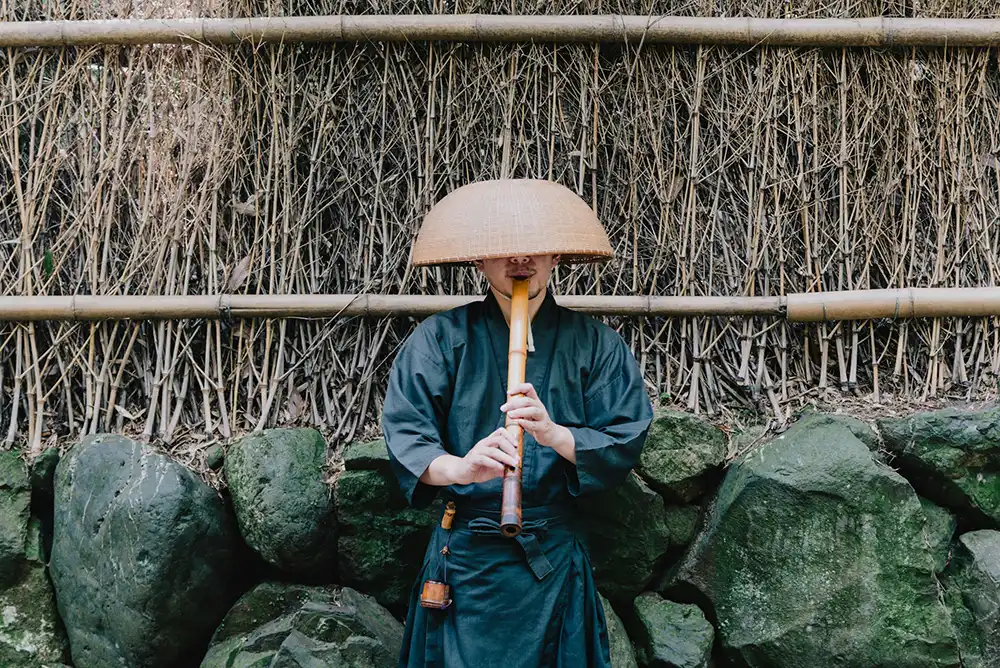
At a basic level, the shakuhachi is an end-blown bamboo flute from Japan, traditionally made from madake bamboo and played vertically. Western concert flutes, by contrast, are side-blown metal instruments designed for consistency, projection, and precise intonation within large ensembles.
The shakuhachi evolved under very different conditions. Rather than serving primarily as an orchestral instrument, it developed as a solo voice and later as a chamber instrument. Its construction emphasizes expressive range, tonal depth, and flexibility over uniformity. This fundamental difference in purpose shapes every aspect of its sound.
Why the Shakuhachi Sounds Breathier, Darker, and More Vocal
Listeners often describe the shakuhachi as breathy or airy, but this quality is not simply an unrefined sound. The instrument is designed to allow controlled breath noise to blend with pitch, creating a complex tone that feels alive and responsive.
Because the shakuhachi does not seal the air stream as tightly as a Western flute, subtle variations in breath pressure directly affect the sound. The result is a darker timbre with audible texture, closer to vocal expression than to the bright, focused tone of a metal flute. In traditional shakuhachi performance, this tonal richness is considered a core expressive element rather than an imperfection.
How the Blowing Technique at the Utaguchi Shapes the Sound
End-Blown Versus Lip Plate Design
Western flutes use a lip plate that helps stabilize embouchure and direct airflow efficiently across the tone hole. The shakuhachi instead uses a sharp blowing edge called the utaguchi, cut into the end of the bamboo.
This design requires the player to shape pitch and tone almost entirely through subtle changes in angle, breath speed, and embouchure. Even a movement of a fraction of a millimeter can dramatically change the sound. This sensitivity allows for expressive nuance but also makes the instrument demanding to learn, especially for players coming from Western flute traditions.
The Role of Bamboo in the Shakuhachi’s Unique Tone
Material plays a decisive role in sound. Metal flutes are engineered for stability and uniform response. Bamboo, by contrast, is organic, variable, and acoustically complex.
Madake bamboo has natural nodes, varying fiber density, and subtle irregularities that influence resonance. These characteristics contribute to the shakuhachi’s warm, grounded tone and its ability to respond intimately to the player’s breath. No two pieces of bamboo are identical, and this individuality is reflected in the voice of each instrument.
Jiari and Jinashi Shakuhachi as Distinct Sound Worlds
Refined Versus Natural Bore Design
Modern shakuhachi generally fall into two broad categories: jiari and jinashi. Jiari shakuhachi uses a carefully shaped internal bore, refined with traditional materials, to create balanced pitch, clarity, and stability across registers. This makes them well-suited for ensemble music and formal performance contexts, including sankyoku shakuhachi performance.
Jinashi shakuhachi retains a more natural bamboo interior. Their sound is often darker, more raw, and highly responsive to subtle breath changes. Many players associate jinashi instruments with meditative solo traditions and koten honkyoku shakuhachi performances. Neither approach is superior; each represents a different aesthetic and musical intention.
Pitch Flexibility and the Importance of Microtones
Western flutes are designed around fixed pitches and standardized tuning systems. The shakuhachi, however, treats pitch as something fluid and expressive.
Through techniques such as meri and kari, the player intentionally lowers or raises pitch by changing the blowing angle. These microtonal shifts are central to traditional repertoire and allow melodies to breathe and bend in ways that feel closer to speech or chant. For new listeners, this flexibility can sound unfamiliar, but it is essential to the shakuhachi’s emotional depth.
Zen Practice and Honkyoku Sound Aesthetics
The shakuhachi’s sound was shaped in part by its use within Zen Buddhist practice, particularly by the komuso monks who played solo pieces known as honkyoku. These works emphasize breath, silence, and the natural decay of sound as much as melody.
In this context, tone is not judged solely by purity or volume but by presence and intention. The space between notes, the sound of air, and the natural unevenness of bamboo all become expressive tools. This aesthetic continues to influence how the instrument is played and heard today.
Meditation, Music Performance, or Both
The shakuhachi is often associated with meditation, but it is equally a concert instrument. Historically, it has served both roles, sometimes simultaneously.
In formal settings, shakuhachi performances can be highly disciplined and musically rigorous. At the same time, the act of playing demands focused breathing, posture, and awareness, qualities that naturally support meditative practice. Rather than choosing between meditation and performance, the shakuhachi integrates both.
What Western Flute Players Often Find Most Challenging
Players trained on Western flutes are frequently surprised by how exposed shakuhachi playing feels. There is no mechanism to automatically correct pitch, and tone production depends entirely on the body.
Learning to control breath noise, accept pitch flexibility, and work with an instrument that responds differently every day can be both challenging and deeply rewarding. Many players discover that the shakuhachi changes how they listen, not only to the instrument but to their own breathing and sound production.
Why Lineage and Craftsmanship Matter to the Sound
The sound of a shakuhachi is shaped not only by its materials but by the knowledge embedded in its construction. Traditional bore design, utaguchi shaping, and tuning methods are passed down through lineages of players and makers.
An instrument made without this understanding may resemble a shakuhachi visually but lack depth, balance, or expressive range. Proper guidance and well-made instruments are essential for anyone seeking the calm, power, and subtlety that draw people to the shakuhachi in the first place.
Conclusion
The shakuhachi sounds different from Western flutes because it was never meant to sound the same. Its voice reflects bamboo rather than metal, breath rather than mechanism, and a musical culture that values expression, presence, and subtlety. For those drawn to its sound, understanding these foundations is the first step toward appreciating its depth. To hear how these qualities come alive in authentic playing, I invite you to explore my shakuhachi performances and experience the instrument in its full musical and expressive context.
About the Author
Shawn Schroeder is a highly respected Shakuhachi craftsman and performer whose lifelong devotion to the instrument began in his youth and deepened through rigorous study with some of the world’s foremost masters. Since 2005, he has trained extensively under Bill Shozan Schultz, Kaoru Kakizakai, and other leading KSK teachers, including Kazushi Matama, Teruo Furuya, and Akikazu Nakamura, while traveling frequently to Japan to refine both his playing and his craftsmanship. Guided by the mentorship of renowned makers including John Kaizan Neptune, Shingo Kimura, and Katashi Ishikawa, Shawn has mastered traditional Japanese techniques for crafting professional Jiari and Jinashi Shakuhachi of the highest quality. Upholding the integrity of centuries-old practices while carrying forward the lineage of knowledge generously shared with him, Shawn is recognized for blending uncompromising authenticity with artistry, ensuring each instrument embodies both technical precision and spiritual depth.